Publishing
How a manga chapter becomes a book
The same story can appear in a magazine, a digital chapter and a collected volume, each on its own schedule.
A magazine issue marks a stage in the story
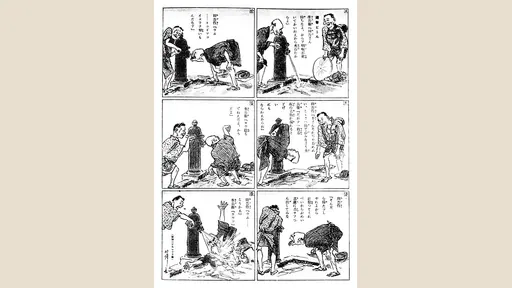
A new manga can reach readers one chapter at a time. The page above comes from Rakuten Kitazawa’s Tagosaku and Mokube Sightseeing in Tokyo, published in the newspaper supplement Jiji Manga in 1902. It is one example of comics reaching readers through a regular publication long before the digital chapter list.
In a magazine like Weekly Shonen Jump, chapters share an issue with other series. Jan ga Abunai! began in issue 51, which is the magazine’s issue number. The chapter is the first installment of Nakama’s story. A later issue can contain its second installment alongside much later chapters of the magazine’s established titles.
An official digital service can offer another way to follow the serial. Shueisha’s MANGA Plus displays series with chapter lists and explains how reading availability works on its own service. The entries you can access depend on the program, series, language and region. A store that sells collected volumes may follow a different schedule from the platform that carries weekly chapters.
The collected volume groups parts of the serial
A collected volume, often called a tankōbon in Japanese publishing contexts, brings several chapters together under a separate book number. It can give the reader a contents page, chapter breaks and material suited to a book, such as an afterword or a cover illustration. Open the book and look for the actual contents when you need to know which chapters are inside.
The format changes how you notice the pacing. A new chapter may end on a decision that leaves a weekly reader thinking about it for days. In the collected book, turning the page can resolve it in seconds. Both experiences are built from the same scene. They give the pause very different lengths.
Choose the schedule that works for you
Follow the serial if you enjoy discussing the story around each new chapter. Follow a collected edition if you prefer to read several chapters together or want consistent books on a shelf. If you switch halfway through, use the latest chapter you’ve read to find which book contains it. The newest English volume can sit behind the newest Japanese chapter even when both release schedules are working as announced.
For a new title, keep the creator’s name and the original title in your notes. The first translated listing may use a different spelling from the announcement you saw.