Manga basics
How to read manga right to left
A practical guide to page order, speech balloons and irregular panels for anyone opening their first manga.
Start at the front of the Japanese book
If you mostly read English-language paperbacks, the front of a right-to-left manga initially feels like the back. Open it from the side the cover invites you to and start with the page on your right. On a spread, the right page generally precedes the left. Within a simple row of panels, read from the right side to the left and move down when you finish that row.
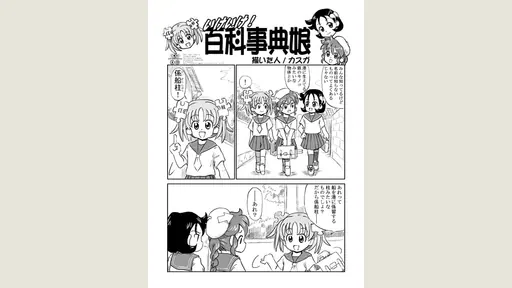
A panel’s balloons often guide you in the same direction. Start with the higher balloon when levels are clear, with the upper-right one as a useful first guess for a row. Then see whose mouth the tail points at. You can usually confirm the exchange from the question, the answer and the expression on the speaker’s face.
Try it on Kasuga’s page above. The group begins the conversation in the upper-right panel. The close-up at upper left is the reply. The wide panel below returns to the group, where the right-hand balloon continues the explanation.
What to do when the panels don’t form rows
A tall panel can sit beside two shorter ones. Trace the gutters, the gaps between the images, to see which shapes group together. When the top-right image is a large establishing shot, it may introduce the scene before the smaller panels on the left show the reactions. Strong diagonal action or a balloon that crosses a gutter can give you a second clue.
Try a page with little dialogue and say to yourself what changed from one image to the next. If a character seems to respond before something happens, go back to the neighboring panel. A few pages of practice make the direction feel more natural. Some editions or comics use a different direction, and vertical webtoons guide you down the page.
Use the page direction in a digital reader
In Manga Yugen’s right-to-left reader mode, tapping the left side or pressing the left arrow advances the page. A wider screen may show a spread, while a narrow screen usually shows one page at a time. The chapter settings let you check the direction if you switch between Japanese manga and vertical comics.
Give the art more width if you find yourself zooming for every line. A single-page view on a phone can make the balloons clearer than trying to fit the whole spread. Return to the spread when a moment depends on seeing both pages together.